|
Research on human athletes is changing what we know
about stretching. For example, it is now recognized that aggressive stretching
should only take place after muscles are warmed up and shortened from exertion.
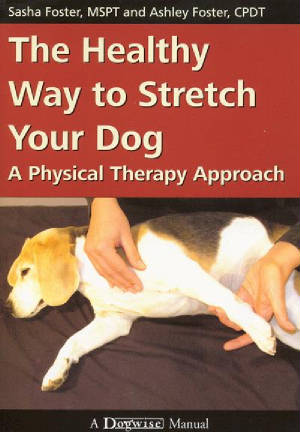
Authors Sasha and Ashley Foster have applied this latest research to dogs—many of whom compete in vigorous canine sporting events—so that you can learn how to stretch your dog safely and effectively to prevent injuries, maintain joint integrity, and improve you dog’s fitness
whether he is an elite canine athlete or a lap dog. Over 300 photos and diagrams demonstrate the best way to stretch
each major muscle group in great detail. Special emphasis is given to correct
hand placement for joint stabilization and how to maintain straight plane movement.
Stretching routines are presented for both large and small dogs, older dogs, and those
who are involved in a variety of dog sports. Learn more about: How to read your dog’s body language and behavior while
stretching him.
Stretching your dog in such a way as to not hurt yourself while doing it. 20 minute daily maintenance stretching routines. Do’s and don’ts
when stretching, and when you need to consult with a vet.
Special considerations when stretching older dogs and small or toy dogs.
|
 |
|